I remember meeting a driver who owned an older car that still looked and felt almost new.
The paint was clean.
The tires were in good shape.
The engine started smoothly.
The interior did not smell old.
There were no strange noises, no warning lights, and no random parts rolling around in the trunk.
At first, I thought the car must have been rarely used.
But that was not the case.
The owner drove it every day.
The difference was simple.
He maintained it properly.
He checked the oil.
He watched the tire pressure.
He did not ignore small sounds.
He serviced the car on time.
He kept records.
He fixed small problems before they became big problems.
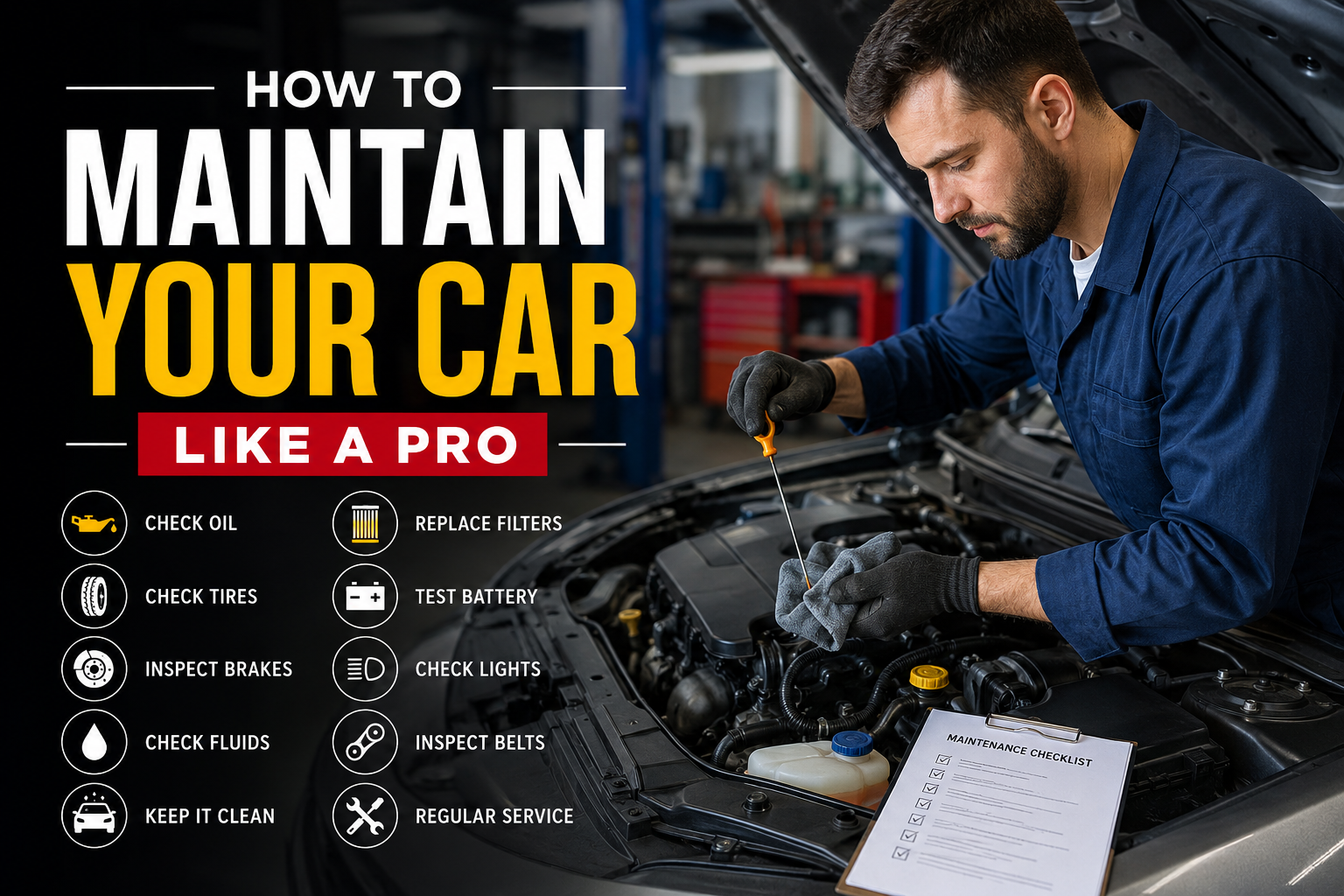
That is what “maintaining your car like a pro” really means.
It does not mean you need to become a mechanic.
It does not mean you need expensive tools.
It means you understand the basic things your car needs, you follow a routine, and you pay attention when something changes.
A well-maintained car is usually safer, more reliable, more comfortable, and often cheaper to own over time.
This guide explains how to maintain your car like a pro in a simple, practical way.
Important: Always follow your vehicle owner’s manual first. Maintenance needs can vary by car model, engine type, mileage, climate, fuel type, and driving conditions. If you are unsure, ask a qualified mechanic.
Table of Contents
- Quick Answer: How Do You Maintain Your Car Like a Pro?
- Key Facts About Car Maintenance
- Follow the Owner’s Manual
- Check Engine Oil Regularly
- Keep the Tires in Good Condition
- Inspect Brakes Before They Become Dangerous
- Check All Important Fluids
- Take Care of the Battery
- Replace Filters on Time
- Inspect Belts and Hoses
- Keep Lights and Wipers Working
- Wash and Protect the Car
- Listen for Strange Sounds
- Keep Maintenance Records
- Simple Monthly Car Maintenance Checklist
- Common Car Maintenance Mistakes
- When Should You Visit a Mechanic?
- FAQs About Car Maintenance
- Final Thoughts
- Sources and Further Reading
Quick Answer: How Do You Maintain Your Car Like a Pro?
To maintain your car like a pro, follow a simple routine:
- Read your owner’s manual
- Check engine oil regularly
- Keep tire pressure correct
- Inspect tire tread and sidewalls
- Rotate tires when recommended
- Check brakes if you hear noise or feel vibration
- Keep coolant, brake fluid, washer fluid, and other fluids at proper levels
- Test the battery before it fails
- Replace air filters, oil filters, and cabin filters on time
- Inspect belts and hoses
- Keep lights and wipers working
- Wash the car regularly
- Do not ignore dashboard warning lights
- Keep service records
The goal is not to fix every part yourself.
The goal is to notice problems early and prevent avoidable damage.
A professional approach is simple:
Small checks.
Regular service.
Early repairs.
No guessing.
No ignoring warning signs.
Key Facts About Car Maintenance
| Maintenance Area | Why It Matters | How Often to Check |
|---|---|---|
| Engine oil | Protects engine parts and reduces wear | Monthly and before long trips |
| Tires | Affects braking, steering, comfort, and fuel use | Monthly and before long trips |
| Brakes | Essential for stopping safely | When noise, vibration, or warning signs appear |
| Coolant | Helps prevent engine overheating | Monthly or as manual recommends |
| Battery | Helps start the car and power electrical systems | Every few months |
| Air filter | Helps engine breathe properly | At service intervals |
| Cabin filter | Improves interior air quality | As manual recommends |
| Belts and hoses | Support cooling, charging, and engine systems | At service or if cracks appear |
| Lights | Helps visibility and road safety | Monthly |
| Wipers | Clears rain, dust, and road spray | Replace when streaking or noisy |
| Exterior cleaning | Protects paint and reduces corrosion risk | Regularly |
| Service records | Helps resale value and repair tracking | After every service |
Regular maintenance helps catch problems early. NHTSA advises drivers to inspect tires often, check tire pressure and tread, and replace tires when the tread is worn down to 2/32 of an inch.
1. Follow the Owner’s Manual
The owner’s manual is the most important maintenance guide for your specific car.
Many drivers search online for general advice, but every vehicle has its own needs.
Your manual tells you:
- Correct engine oil type
- Tire pressure
- Fluid specifications
- Maintenance intervals
- Warning light meanings
- Tire rotation guidance
- Service schedule
- Recommended replacement parts
- Towing and loading limits
This matters because two cars can look similar but need different fluids, different oil grades, different tire pressure, and different service intervals.
Why the manual matters
Using the wrong oil, coolant, brake fluid, or transmission fluid can damage the car.
Guessing is not a professional habit.
A pro-style driver checks the manual first.
What to do
Keep the owner’s manual in the glovebox or save a digital copy on your phone.
Before buying oil, coolant, filters, bulbs, or other parts, check the correct specification.
If you bought a used car without the manual, many manufacturers provide digital versions online.
2. Check Engine Oil Regularly
Engine oil is one of the most important fluids in your car.
It helps lubricate moving parts, reduce friction, manage heat, and protect the engine from wear.
Low oil or old oil can lead to serious engine damage.
Signs your oil needs attention
You may notice:
- Oil warning light
- Engine ticking noise
- Burning oil smell
- Oil spots under the car
- Dark, dirty oil on the dipstick
- Oil level dropping between services
- Blue smoke from the exhaust
How to check engine oil
Most cars with a dipstick can be checked like this:
- Park on level ground.
- Turn off the engine.
- Wait a few minutes.
- Pull out the dipstick.
- Wipe it clean.
- Insert it fully again.
- Pull it out and check the level.
- Make sure the oil is between the minimum and maximum marks.
Some modern cars use electronic oil-level displays instead of a traditional dipstick.
Check your manual for the correct method.
Important warning
Do not overfill engine oil.
Too much oil can also cause problems.
Use the correct oil grade and specification recommended by the manufacturer.
If the oil level keeps dropping, adding oil is only a temporary step. The real issue may be a leak, burning oil, or another mechanical problem.
3. Keep the Tires in Good Condition
Tires are the only parts of the car that touch the road.
That makes them extremely important.
Good tires help with:
- Braking
- Steering
- Comfort
- Fuel economy
- Wet-road grip
- Stability
- Emergency control
Poor tire condition can make even a good car feel unsafe.
Check tire pressure
Check tire pressure at least once a month and before long journeys.
Use the recommended pressure from:
- Driver’s door sticker
- Fuel flap
- Owner’s manual
Do not use the maximum pressure printed on the tire sidewall as your normal target.
That number is not the recommended everyday pressure for your vehicle.
NHTSA recommends checking tires for damage, tread, and inflation pressure regularly, especially before long trips.
Check tire tread
Tread helps the tire grip the road, especially in rain.
If tread becomes too low, the tire cannot move water properly, and the risk of losing grip increases.
NHTSA states that tires should be replaced when tread is worn down to 2/32 of an inch.
Look for tire damage
Check for:
- Cracks
- Bulges
- Cuts
- Nails
- Uneven wear
- Sidewall damage
- Exposed cords
A bulge on the tire sidewall is serious.
Do not ignore it.
It can mean internal tire damage.
Rotate tires when needed
Tire rotation helps tires wear more evenly.
The correct rotation pattern and interval depends on the vehicle, tire type, and drivetrain.
Check the owner’s manual or ask your mechanic.
4. Inspect Brakes Before They Become Dangerous
Brakes are not something to delay.
A brake problem can quickly become a safety problem.
Brake pads, rotors, fluid, calipers, and brake lines all need proper condition to stop the car safely.
Common brake warning signs
You may notice:
- Squeaking
- Squealing
- Grinding
- Brake pedal vibration
- Steering wheel shaking while braking
- Soft brake pedal
- Longer stopping distance
- Brake warning light
- Burning smell after braking
- Car pulling to one side
AAA notes that squealing can be linked to worn brake pads, and vibration during braking can point to rotor-related issues.
What to do
If your brakes make noise or feel different, get them inspected.
Do not wait until the sound becomes louder.
Brake pads are usually cheaper than rotors, calipers, or deeper brake-system repairs.
Stop driving if:
- Brake pedal goes to the floor
- Brake fluid is leaking
- The car does not stop properly
- Severe grinding appears
- Brake warning light stays on
- Car pulls strongly while braking
A pro driver treats brake changes seriously.
5. Check All Important Fluids
Your car depends on several fluids.
Each fluid has a job.
If one is low, dirty, leaking, or wrong, the car may not work properly.
Important fluids to check
Common vehicle fluids include:
- Engine oil
- Coolant
- Brake fluid
- Transmission fluid
- Power steering fluid
- Windshield washer fluid
- Differential fluid
- Transfer case fluid in some vehicles
Not every car allows easy checking of every fluid at home.
Some modern transmissions are sealed and require professional service.
Coolant
Coolant helps control engine temperature.
Low coolant can cause overheating.
Check the coolant reservoir when the engine is cold.
Never open the radiator cap or coolant cap when the engine is hot.
Hot pressurized coolant can cause serious burns.
Brake fluid
Brake fluid supports hydraulic braking.
If brake fluid is low, it may indicate worn brake pads or a leak.
Do not ignore low brake fluid.
Washer fluid
Washer fluid may seem small, but it matters for visibility.
Dust, mud, insects, and road spray can quickly block your view.
Keep the washer fluid topped up.
Fluid leaks
Look under the car occasionally.
Warning signs include:
- Brown or black oil spots
- Red or pink transmission fluid
- Green, orange, blue, or pink coolant
- Clear oily brake fluid
- Strong fuel smell
If you see a leak, identify it early.
Small leaks often become expensive when ignored.
6. Take Care of the Battery
A weak battery can leave you stranded without warning.
Car batteries are affected by age, heat, cold, short trips, corrosion, and electrical drain.
Signs of battery trouble
You may notice:
- Slow engine start
- Clicking sound when starting
- Dim headlights
- Battery warning light
- Electrical features acting strangely
- Corrosion on battery terminals
- Car starts after a jump but fails again later
A battery warning light may indicate a charging-system problem involving the battery, alternator, or wiring, according to AAA guidance on warning lights.
How to maintain the battery
You can:
- Keep terminals clean
- Make sure cables are tight
- Avoid leaving lights on
- Avoid long use of electronics when engine is off
- Test the battery before extreme weather
- Replace weak batteries before they fail
If your battery keeps dying, do not assume the battery is always the problem.
The alternator, wiring, or parasitic drain may be the real issue.
7. Replace Filters on Time
Filters protect important systems.
They are simple parts, but they matter.
Engine air filter
The engine air filter helps stop dirt and debris from entering the engine.
A clogged filter may affect performance and fuel economy.
Oil filter
The oil filter helps remove contaminants from engine oil.
It is usually replaced during oil changes.
Cabin air filter
The cabin air filter cleans air entering the interior through the heating and air-conditioning system.
A dirty cabin filter can reduce airflow and create unpleasant smells.
Fuel filter
Some vehicles have replaceable fuel filters.
Others use filters built into the fuel system.
Check your manual for details.
Professional habit
Do not wait until filters are completely blocked.
Follow the recommended service schedule.
If you drive in dusty areas, heavy traffic, or polluted conditions, filters may need attention sooner.
8. Inspect Belts and Hoses
Belts and hoses are easy to forget because they are not always visible.
But they help important systems work.
A belt may drive the alternator, water pump, air-conditioning compressor, or power steering pump.
Hoses carry coolant, vacuum, fuel vapor, or air.
Warning signs of belt problems
Look for:
- Cracks
- Fraying
- Squealing noise
- Glazing
- Loose belt
- Warning lights
- Overheating
- Loss of power steering in some cars
Warning signs of hose problems
Look for:
- Bulging
- Cracks
- Leaks
- Soft spots
- Coolant smell
- Overheating
- Wet areas around hose ends
The Car Care Council lists belts, hoses, batteries, brakes, cooling systems, filters, fluids, tires, suspension, and steering among the vehicle systems drivers should maintain.
What to do
Ask your mechanic to inspect belts and hoses during service.
Replacing an old hose or belt early is usually easier than dealing with a breakdown later.
9. Keep Lights and Wipers Working
Lights and wipers are basic safety items.
They help you see and help other drivers see you.
Check your lights
Check:
- Headlights
- Brake lights
- Turn signals
- Reverse lights
- Hazard lights
- Fog lights if fitted
- Number plate lights
- Interior warning lights
A broken brake light can be dangerous because drivers behind you may not know you are slowing down.
Check your wipers
Replace wipers if they:
- Leave streaks
- Skip across the glass
- Make noise
- Leave blurry patches
- Have cracked rubber
- Do not clear rain properly
Wipers are small, but poor visibility can become dangerous quickly in rain, dust, snow, or road spray.
Keep the windshield clean
Clean glass improves visibility.
Use proper automotive glass cleaner and a clean microfiber cloth.
Also clean the inside of the windshield because film and fingerprints can increase glare.
10. Wash and Protect the Car
Car maintenance is not only about the engine.
The exterior and interior also need care.
Regular washing helps remove:
- Dust
- Mud
- Bird droppings
- Tree sap
- Road salt
- Brake dust
- Pollution
- Insects
Some of these can damage paint if left too long.
Protect the paint
Wax, sealant, or ceramic-style products can add a protective layer.
You do not need to overdo it, but regular protection can help keep the car cleaner and easier to wash.
Clean the interior
A clean interior is more comfortable and can reduce long-term wear.
Vacuum:
- Seats
- Carpets
- Floor mats
- Trunk
- Seat gaps
- Door pockets
Wipe:
- Dashboard
- Steering wheel
- Gear selector
- Door handles
- Cup holders
Avoid greasy products on the steering wheel, pedals, floor mats, or gear selector.
These surfaces should remain clean and easy to grip.
11. Listen for Strange Sounds
A pro driver listens to the car.
Many problems start with sounds before a warning light appears.
Common sounds to notice
| Sound | Possible Meaning |
|---|---|
| Squealing when braking | Worn brake pads |
| Grinding when braking | Serious brake wear |
| Clicking when starting | Weak battery or starter issue |
| Knocking from engine | Fuel, oil, or internal engine issue |
| Squealing under hood | Belt or pulley issue |
| Clunking over bumps | Suspension problem |
| Humming while driving | Tire or wheel bearing issue |
| Hissing | Vacuum leak or coolant leak |
Not every sound means disaster.
But every new sound deserves attention.
What to note
When you hear a sound, notice:
- When it happens
- Where it seems to come from
- Whether it changes with speed
- Whether it changes with braking
- Whether it happens only when turning
- Whether it happens when the engine is cold or warm
This information helps a mechanic diagnose the issue faster.
12. Keep Maintenance Records
Maintenance records are a professional habit.
They help you know what was done and when.
They also help with resale value.
A buyer is more likely to trust a car with clear service history.
What to record
Keep notes for:
- Oil changes
- Tire rotations
- Brake service
- Battery replacement
- Filter changes
- Coolant service
- Transmission service
- Repairs
- New tires
- Wheel alignment
- Inspections
You can use:
- A notebook
- A spreadsheet
- A notes app
- Service receipts
- Maintenance apps
Why records matter
Records help you avoid guessing.
Instead of saying, “I think I changed the oil recently,” you know the date and mileage.
That is how careful owners manage their cars.
Simple Monthly Car Maintenance Checklist
Use this quick checklist once a month:
- Check engine oil level
- Check tire pressure
- Inspect tire tread
- Look for tire cuts or bulges
- Check coolant level when cold
- Check washer fluid
- Test headlights and brake lights
- Test turn signals
- Inspect windshield wipers
- Look under the car for leaks
- Listen for new sounds
- Check dashboard warning lights
- Clean windshield and mirrors
- Make sure emergency tools are in the car
Before a long trip, also check:
- Spare tire or repair kit
- Jack and tools
- Phone charger
- First-aid kit
- Tire inflator
- Jump starter or jumper cables
- Emergency triangle
- Water
- Flashlight
Common Car Maintenance Mistakes
Mistake 1: Ignoring the owner’s manual
General advice is useful, but your vehicle’s manual should be the main guide.
Mistake 2: Waiting for warning lights
Some problems appear before dashboard warnings.
Do not rely only on lights.
Mistake 3: Skipping oil changes
Old oil can reduce engine protection.
Follow the correct interval for your vehicle.
Mistake 4: Driving with low tire pressure
Low tire pressure can affect braking, handling, tire wear, and fuel economy.
Mistake 5: Ignoring brake noise
Brake noise should be inspected early.
Mistake 6: Using cheap wrong parts
Cheap parts are not always bad, but wrong parts are always risky.
Use parts that meet the correct specification.
Mistake 7: Overfilling fluids
More is not always better.
Too much oil, coolant, or transmission fluid can create problems.
Mistake 8: Never checking the battery
A weak battery often fails at the worst time.
Test it before extreme heat or cold.
Mistake 9: Forgetting the spare tire
A spare tire is useless if it is flat, missing, or the tools are not in the car.
Mistake 10: Not fixing small leaks
Small leaks can become big repairs.
Inspect early.
When Should You Visit a Mechanic?
Visit a mechanic if you notice:
- Check engine light
- Oil pressure warning light
- Brake warning light
- Battery warning light
- Engine overheating
- Strong burning smell
- Fluid leak
- Grinding brakes
- Steering vibration
- Suspension clunking
- Transmission slipping
- Car pulling to one side
- Repeated battery failure
- Unusual smoke
- Loud engine knocking
Also visit a mechanic before buying a used car.
A pre-purchase inspection can save you from expensive surprises.
FAQs About Car Maintenance
How often should I service my car?
Follow your owner’s manual. Service intervals vary by vehicle, engine type, oil type, mileage, and driving conditions.
How often should I check tire pressure?
Check tire pressure at least once a month and before long trips. Check when tires are cold.
How do I know if my engine oil is low?
Check the dipstick or electronic oil-level display. Warning lights, ticking sounds, or burning smells can also indicate oil-related problems.
Can I maintain my car without being a mechanic?
Yes. You can check oil, tires, lights, wipers, washer fluid, leaks, and warning signs. Leave complex repairs to professionals.
Is car maintenance expensive?
Maintenance has a cost, but ignoring maintenance is often more expensive. Small problems can become major repairs.
What is the most important car maintenance task?
Oil, tires, brakes, fluids, and battery checks are among the most important basic maintenance areas.
Should I use synthetic oil?
Use the oil type recommended in your owner’s manual. Some vehicles require synthetic oil, while others may allow different options.
How often should I rotate tires?
Follow your owner’s manual or tire manufacturer guidance. Rotation helps tires wear evenly.
Why does my car battery keep dying?
Possible causes include an old battery, bad alternator, loose connections, corrosion, electrical drain, or short trips.
How do I know if my brakes need replacement?
Signs include squealing, grinding, vibration, soft pedal, longer stopping distance, or brake warning lights.
Should I wash my car regularly?
Yes. Washing removes dirt, salt, bird droppings, and other materials that can damage paint or contribute to corrosion.
What should I keep in my car for emergencies?
Useful items include a phone charger, first-aid kit, flashlight, tire inflator, pressure gauge, jump starter, reflective triangle, water, and basic tools.
Can I ignore a small oil leak?
No. A small leak may not stop the car immediately, but it should be inspected before it becomes worse.
Why is my car making a clunking sound?
Clunking may come from suspension, steering, loose parts, or worn joints. Have it inspected.
Do newer cars need less maintenance?
Newer cars may have better systems and longer service intervals, but they still need oil, tires, brakes, fluids, filters, batteries, and inspections.
Final Thoughts
Maintaining your car like a pro is not about knowing everything.
It is about being consistent.
Check the oil.
Watch the tires.
Listen for sounds.
Do not ignore warning lights.
Keep fluids at the right level.
Replace filters on time.
Inspect brakes early.
Keep records.
Wash the car.
Follow the owner’s manual.
A car usually gives signs before a serious problem happens.
A small leak.
A weak start.
A squealing brake.
A low tire.
A strange smell.
A warning light.
These signs are easy to ignore when the car still drives.
But careful drivers treat them as early messages.
The best-maintained cars are not always the newest or most expensive.
They are the cars whose owners pay attention.
A few minutes of checking can save money, stress, and sometimes even prevent dangerous situations.
That is the real secret.
Maintain the car before it asks for help.
Sources and Further Reading
- National Highway Traffic Safety Administration — TireWise tire safety guidance
- National Highway Traffic Safety Administration — Summer driving and tire inspection tips
- National Highway Traffic Safety Administration — Winter driving tire inspection guidance
- AAA — Vehicle warning lights and maintenance guidance
- Bridgestone — Car maintenance checklist overview
- Your vehicle manufacturer’s owner’s manual
- A qualified mechanic or certified service center
About the Author