I remember talking to a friend who was ready to buy his first proper car.
He had two options.
One was a brand-new car from the dealership.
It had zero mileage.
Fresh paint.
New tires.
Warranty.
Modern features.
And that clean new-car smell everyone talks about.
The second option was a used car.
It was two years old.
It had already lost some value.
It was cheaper.
It had more features for the same budget.
But it also came with questions.
Was it maintained properly?
Had it been in an accident?
Was the mileage real?
Would it need expensive repairs soon?
That is the real confusion most buyers face.
A new car gives peace of mind.
A used car can save money.
A new car gives warranty.
A used car gives better value.
A new car feels safer emotionally.
A used car may be smarter financially.
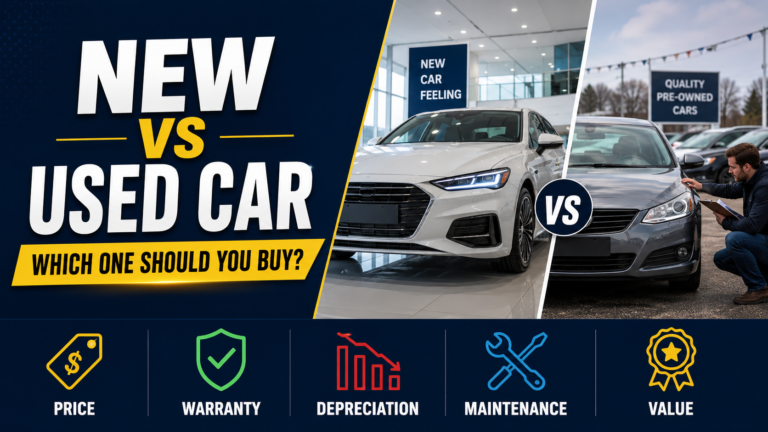
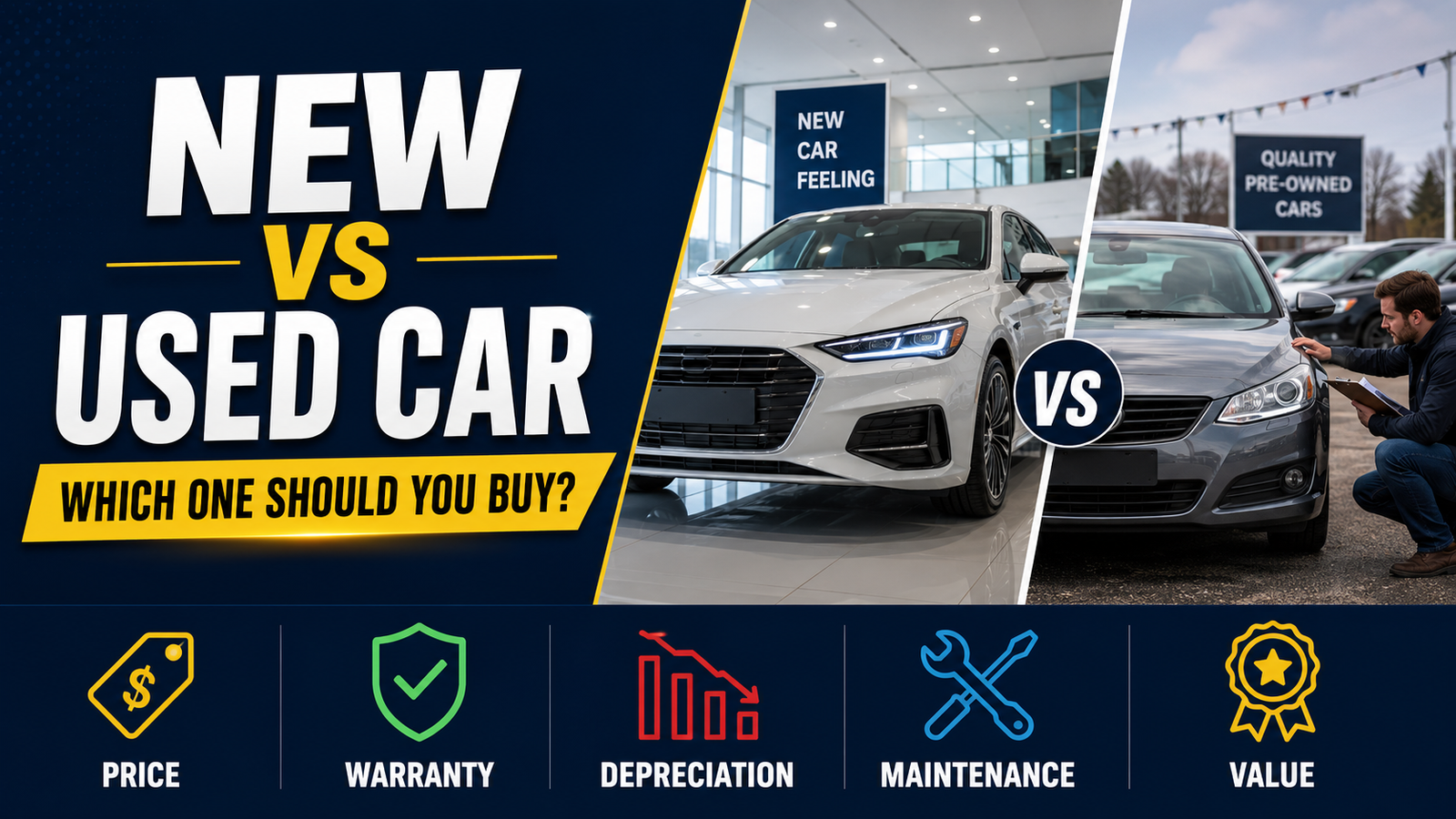
So which one should you buy?
The honest answer is simple:
It depends on your budget, driving needs, local market, financing options, maintenance risk, and how long you plan to keep the car.
This guide explains the difference between new and used cars in a simple, practical way so you can make a smarter buying decision.
Important: Car prices, taxes, insurance, interest rates, warranties, resale value, and repair costs vary by country, city, brand, and model. Always check local market prices, vehicle history, inspection reports, and ownership costs before buying.
Table of Contents
- Quick Answer: Should You Buy a New or Used Car?
- Key Facts About New vs Used Cars
- Purchase Price
- Depreciation
- Warranty and Peace of Mind
- Maintenance and Repair Costs
- Financing and Monthly Payments
- Insurance Costs
- Features and Technology
- Safety
- Reliability
- Resale Value
- Certified Pre-Owned Cars
- Which One Is Better for Different Buyers?
- Common Mistakes When Buying New or Used Cars
- New Car Buying Checklist
- Used Car Buying Checklist
- FAQs About New vs Used Cars
- Final Thoughts
- Sources and Further Reading
Quick Answer: Should You Buy a New or Used Car?
You should buy a new car if:
- You want full warranty coverage
- You want the latest safety features
- You want zero previous-owner history
- You plan to keep the car for many years
- You want easier financing options
- You do not want early repair worries
- You want exact color, trim, and features
- You can afford the higher price and depreciation
You should buy a used car if:
- You want to save money upfront
- You want more car for the same budget
- You want to avoid the biggest early depreciation
- You are comfortable checking vehicle history
- You can get a trusted mechanic inspection
- You want lower monthly payments
- You are buying a reliable model with good service records
- You do not mind older features or higher mileage
In simple words:
A new car is better for peace of mind.
A used car is better for value.
A new car is safer if you want warranty and low risk.
A used car is smarter if you know how to inspect it properly.
The best choice is not always new or used.
The best choice is the car that fits your budget without creating stress later.
Key Facts About New vs Used Cars
| Category | New Car | Used Car |
|---|---|---|
| Purchase price | Higher | Lower |
| Warranty | Full manufacturer warranty | Limited, expired, or dealer warranty |
| Depreciation | Fastest in early years | Slower after first owner |
| Maintenance risk | Lower at first | Depends on history and condition |
| Financing | Often easier, sometimes lower rates | May have higher rates |
| Insurance | Usually higher | Usually lower |
| Features | Latest technology | Older features |
| Safety | Latest safety systems | Depends on model year and trim |
| Choice | Exact trim/color possible | Limited to available inventory |
| Hidden problems | Very low risk | Higher risk without inspection |
| Best for | Long-term peace of mind | Budget and value |
In 2026, affordability matters more than ever. Kelley Blue Book reported that the average new-vehicle transaction price was $49,353 in February 2026, while Kelley Blue Book also reported the average used car sold for $26,043 in December 2025. That price gap is one big reason many buyers compare new and used cars carefully.
1. Purchase Price
The first difference is obvious.
A new car usually costs more.
A used car usually costs less.
That does not mean the used car is always better.
It only means the entry cost is lower.
Why new cars cost more
A new car costs more because it gives you:
- Zero previous owner
- Full warranty
- Latest model year
- Latest features
- Fresh tires
- Fresh battery
- No accident history
- No wear from previous use
- Dealer support
- Custom trim and color choice
For some buyers, this peace of mind is worth the extra money.
Why used cars cost less
A used car costs less because someone else has already owned it.
It may have:
- Mileage
- Wear and tear
- Older technology
- Shorter or expired warranty
- Previous repairs
- Unknown driving history
- Older tires or battery
- Cosmetic marks
But a good used car can still be a very smart purchase.
If the car was maintained well, inspected properly, and priced fairly, it may give years of reliable service at a lower cost.
Simple rule
If your budget is tight, used cars usually give better value.
If you want low risk and can afford it, new cars offer more peace of mind.
2. Depreciation
Depreciation means the car loses value over time.
This is one of the biggest costs many buyers forget.
A new car usually loses value fastest in the first few years.
A used car has already gone through part of that value drop.
That is why many financial experts prefer lightly used cars.
Why depreciation matters
Imagine two cars.
One is brand new.
One is three years old.
If both are reliable, the three-year-old car may cost much less while still having many useful years left.
That is where used cars can become attractive.
Edmunds reported that in Q1 2026, three-year-old vehicles retained about 66% of their original MSRP on average, a five-year low for residual values. This means many three-year-old used cars may offer stronger value compared with rising new-car prices.
New car depreciation
A new car may lose value quickly because:
- It becomes “used” after purchase
- Newer models arrive every year
- Mileage starts increasing
- Incentives affect resale
- Market demand changes
- Technology changes quickly
Used car depreciation
A used car still depreciates, but usually more slowly.
The first owner often takes the biggest loss.
The second owner may get better value.
This is why a two-to-four-year-old car can be a smart middle choice.
Simple rule
If you plan to sell the car after only two or three years, depreciation matters a lot.
If you plan to keep the car for 8–10 years, depreciation becomes less painful because you use the car longer.
3. Warranty and Peace of Mind
Warranty is one of the strongest reasons to buy new.
A new car normally comes with manufacturer warranty coverage.
This can protect you from many repair costs during the first few years.
New car warranty benefits
A new car warranty may cover:
- Engine problems
- Transmission issues
- Electrical faults
- Factory defects
- Certain parts failures
- Roadside assistance in some cases
Warranty terms vary by brand and country, so always read the exact details.
Used car warranty
A used car may have:
- Remaining factory warranty
- Certified pre-owned warranty
- Dealer limited warranty
- Third-party warranty
- No warranty at all
A used car without warranty is not automatically bad.
But it increases your risk.
If something expensive fails after purchase, you may have to pay for it yourself.
Peace of mind difference
A new car feels safer because you know its full history.
A used car can also be safe if you verify:
- Service records
- Accident history
- Mileage
- Recall status
- Inspection report
- Ownership documents
The Federal Trade Commission advises used-car buyers to get a vehicle history report and check for open safety recalls before purchase.
4. Maintenance and Repair Costs
Maintenance is not only about oil changes.
It includes everything the car needs to stay safe and reliable.
New car maintenance
A new car usually needs less repair work in the beginning.
You may only need basic maintenance such as:
- Oil changes
- Tire rotations
- Brake inspections
- Fluid checks
- Filter replacements
- Wiper blades
Some brands also offer free scheduled maintenance for a limited time.
This can reduce early ownership costs.
Used car maintenance
A used car may need more attention depending on age and mileage.
It may need:
- Tires
- Battery
- Brakes
- Suspension parts
- Fluid changes
- Belts and hoses
- Spark plugs
- Air conditioning service
- Transmission service
- Engine repairs
A used car is not expensive because it is used.
It becomes expensive when it was neglected.
Service history matters
A used car with complete service history is usually safer than a newer-looking car with no records.
Good service history shows that the previous owner cared for the car.
Look for records of:
- Oil changes
- Brake work
- Tire replacement
- Battery replacement
- Major services
- Accident repairs
- Transmission service
- Coolant service
Simple rule
A well-maintained used car can be better than a badly maintained newer car.
Condition matters more than age alone.
5. Financing and Monthly Payments
Financing can change the real cost of a car.
Many buyers focus only on the monthly payment.
That can be a mistake.
A low monthly payment may hide a long loan, high interest, or expensive total cost.
New car financing
New cars may offer:
- Lower promotional interest rates
- Manufacturer financing deals
- Longer loan terms
- Easier approval in some cases
- Better warranty protection during loan period
This can make new cars attractive even when the purchase price is higher.
Used car financing
Used cars usually cost less, so the loan amount may be smaller.
But interest rates on used cars can sometimes be higher than new-car rates.
The vehicle’s age and mileage can also affect financing options.
What to compare
Before choosing, compare:
- Purchase price
- Down payment
- Interest rate
- Loan length
- Monthly payment
- Total interest paid
- Insurance cost
- Expected repairs
- Resale value
AAA’s 2025 ownership-cost analysis estimated the annual cost to drive a new vehicle 15,000 miles at $11,577, including costs such as depreciation, finance, fuel, insurance, maintenance, license, registration, and taxes.
Simple rule
Do not buy the car with the lowest monthly payment.
Buy the car with the lowest realistic total cost for your situation.
6. Insurance Costs
Insurance is another cost buyers often forget.
A new car usually costs more to insure than a used car.
This is because the replacement value is higher.
Repairs may also cost more because newer cars have advanced sensors, cameras, and electronic systems.
New car insurance
Insurance may be higher because:
- The car is more valuable
- Repairs are more expensive
- Loan providers may require full coverage
- Advanced parts may cost more
- Theft risk may vary by model
Used car insurance
Used cars may be cheaper to insure because:
- Their market value is lower
- Replacement cost is lower
- You may choose less coverage if the car is paid off
- Parts may be cheaper for common models
However, this is not always true.
Some used cars can still be expensive to insure if they are luxury models, sports cars, high-theft models, or difficult to repair.
Simple rule
Always get insurance quotes before buying.
A car that looks affordable may become expensive once insurance is included.
7. Features and Technology
New cars usually win in technology.
They often include the latest:
- Touchscreen systems
- Smartphone connectivity
- Advanced safety features
- Fuel-saving technology
- Driver assistance systems
- Better headlights
- Improved cameras
- Better infotainment
- More efficient engines
- Better crash protection design
Why technology matters
Features are not only about comfort.
Some features can improve safety and convenience.
Useful modern features include:
- Rearview camera
- Blind-spot monitoring
- Lane keeping assist
- Automatic emergency braking
- Adaptive cruise control
- Parking sensors
- Apple CarPlay or Android Auto
- Good headlights
Used cars can still have good features
A used car does not mean old-fashioned.
A three-to-five-year-old used car may already have many modern features.
In some cases, you can buy a higher-trim used car for the price of a basic new car.
For example, instead of buying a new base model, you may find a used higher-trim model with better seats, safety features, and comfort options.
Simple rule
If latest technology matters to you, buy new or nearly new.
If value matters more, a well-equipped used car can be smarter.
8. Safety
Safety depends on more than new or used.
A new car may have the latest safety systems.
A used car may still be safe if it has good crash ratings, proper maintenance, and no hidden damage.
New car safety advantages
New cars may include:
- Stronger crash structures
- More airbags
- Automatic emergency braking
- Lane support
- Blind-spot monitoring
- Better headlights
- Stability control
- Advanced driver assistance systems
Used car safety risks
Used cars may have safety risks if:
- They were repaired poorly after an accident
- Airbags were deployed and not replaced properly
- Tires are old or damaged
- Brakes are worn
- Suspension is weak
- There are open recalls
- Warning lights are hidden or ignored
NHTSA provides a VIN recall lookup tool that lets buyers check whether a vehicle has open safety recalls. It also says recall repairs should be completed free at a local dealership.
Simple rule
A new car usually gives better modern safety technology.
A used car can still be safe if it has strong safety ratings, clean history, no open recalls, and a proper mechanical inspection.
9. Reliability
Reliability means the car starts, drives, and performs consistently without constant problems.
New cars usually have lower early repair risk.
Used cars depend heavily on previous care.
New car reliability
A new car gives you:
- No previous misuse
- Fresh parts
- Warranty support
- Known service schedule
- Lower initial repair risk
But new cars can still have problems.
New models may sometimes have early production issues, software bugs, or recalls.
Used car reliability
A used car can be reliable if:
- It is a proven model
- It has service records
- It was not abused
- Mileage is reasonable
- It passes inspection
- Parts are available
- It has no major accident damage
Some used cars are more reliable than some new cars.
Brand reputation, model history, and maintenance matter.
Simple rule
Do not buy only by brand name.
Research the specific model, year, engine, and transmission.
A reliable model with poor maintenance can still become a bad car.
10. Resale Value
Resale value matters if you plan to sell the car later.
Some cars hold value better than others.
Popular reliable cars usually keep value better because buyers trust them.
New car resale
New cars lose value faster at first.
But if you keep the car long enough, maintain it well, and choose a popular model, resale may still be strong.
Used car resale
Used cars may lose value more slowly because the first owner already absorbed the biggest depreciation.
If you buy the right used car at the right price, you may lose less money when selling later.
What improves resale value?
A car usually holds value better if it has:
- Clean title
- No major accident history
- Complete service records
- Good fuel economy
- Strong reliability reputation
- Popular color
- Original parts
- Low mileage
- Good tires
- Clean interior
- No dashboard warning lights
Simple rule
If resale matters, buy a popular, reliable model and maintain it properly.
Avoid rare, heavily modified, poorly maintained, or accident-damaged vehicles.
11. Certified Pre-Owned Cars
Certified pre-owned cars are used cars that are inspected and sold with extra warranty or certification from a manufacturer or dealer program.
They can be a middle option between new and used.
Why certified pre-owned can be good
A certified pre-owned car may offer:
- Lower price than new
- Better condition than average used cars
- Inspection process
- Limited warranty
- Roadside assistance in some cases
- Better financing options than normal used cars
- More confidence for buyers
Possible drawback
Certified pre-owned cars usually cost more than regular used cars.
You are paying extra for inspection, warranty, and peace of mind.
What to check
Before buying certified pre-owned, ask:
- Who certified the car?
- Is it manufacturer-certified or dealer-certified?
- What exactly is covered?
- How long is the warranty?
- Are there deductibles?
- Is roadside assistance included?
- Can I see the inspection checklist?
- Can I still get an independent inspection?
Simple rule
Certified pre-owned is best for buyers who want used-car savings but still want some warranty protection.
12. Which One Is Better for Different Buyers?
Different buyers need different answers.
Best for first-time buyers: Used car or certified pre-owned
A first-time buyer usually benefits from lower cost.
A reliable used car or certified pre-owned car can be a smart start.
But avoid very cheap cars with unknown history.
Best for families: New or lightly used car
Families usually care about safety, comfort, reliability, and space.
A new car or lightly used car with modern safety features can be a good choice.
Best for tight budget: Used car
If budget is limited, used is usually better.
But do not buy the cheapest available car without inspection.
A cheap bad car can become expensive very quickly.
Best for long-term ownership: New car
If you plan to keep the car for 8–10 years, buying new can make sense.
You get full history from day one and can maintain it properly.
Best for low monthly payment: Used car
Used cars usually have lower purchase prices, which can mean lower payments.
But check interest rate and repair risk.
Best for peace of mind: New car
If you do not want previous-owner risk, buy new.
The full warranty and clean history are valuable.
Best for value: Lightly used car
A two-to-four-year-old used car can often give the best balance of price, features, and remaining life.
Best for technology lovers: New car
If you want the latest safety systems, infotainment, and efficiency, new is usually better.
Common Mistakes When Buying New or Used Cars
Mistake 1: Looking only at price
The cheapest car is not always the cheapest to own.
Always calculate fuel, insurance, maintenance, repairs, taxes, and depreciation.
Mistake 2: Ignoring depreciation
New cars can lose value quickly.
Used cars can reduce that hit.
Think about how long you will keep the car.
Mistake 3: Skipping inspection on a used car
Never trust appearance alone.
A clean car can still have engine, transmission, suspension, flood, or accident problems.
Mistake 4: Not checking vehicle history
For used cars, check service records, accident history, ownership records, and title status.
Mistake 5: Forgetting open recalls
A used car may have open safety recalls.
Check the VIN before buying.
Mistake 6: Buying too much car
A bigger or more luxurious car may cost more in fuel, tires, brakes, insurance, and repairs.
Mistake 7: Choosing monthly payment over total cost
A long loan can make a car look affordable while increasing total cost.
Mistake 8: Ignoring insurance
Always get insurance quotes before purchase.
Mistake 9: Not test driving properly
A short test drive around the block is not enough.
Check braking, steering, acceleration, comfort, visibility, noise, and parking.
Mistake 10: Falling in love too quickly
Do not let emotion control the purchase.
There will always be another car.
New Car Buying Checklist
Before buying a new car, check:
- Final on-road price
- Taxes and registration
- Warranty length
- Service package
- Insurance quote
- Financing rate
- Total loan cost
- Fuel economy
- Safety features
- Resale value
- Dealer fees
- Delivery charges
- Included accessories
- Waiting time
- Exact trim and features
- Return or cancellation policy
Also compare at least two or three dealerships if possible.
A new car’s price can vary depending on dealer, location, incentives, stock, and timing.
Used Car Buying Checklist
Before buying a used car, check:
- Vehicle history report
- Service records
- Accident history
- Open recalls
- Mileage consistency
- Ownership documents
- Engine condition
- Transmission condition
- Brake condition
- Tire condition
- Suspension noise
- Fluid leaks
- Warning lights
- Air conditioning
- Electrical features
- Paint condition
- Rust
- Flood damage signs
- Spare key
- Original documents
- Mechanic inspection
During the test drive, notice:
- Cold start
- Engine noise
- Gear shifts
- Steering feel
- Brake response
- Suspension sounds
- Highway stability
- Dashboard warnings
- Smoke from exhaust
- Unusual smells
If the seller refuses inspection, that is a warning sign.
FAQs About New vs Used Cars
Is it better to buy a new or used car?
A new car is better if you want warranty, latest features, and peace of mind. A used car is better if you want lower price and better value.
Is buying a used car risky?
It can be risky if you skip inspection, history checks, and recall checks. A well-maintained used car with clean records can be a smart purchase.
Why do new cars lose value quickly?
New cars lose value because they become used after purchase, newer models arrive, mileage increases, and market demand changes.
What is the best age for a used car?
A two-to-four-year-old used car is often a good balance because it has already depreciated but may still have modern features and useful life left.
Should I buy a certified pre-owned car?
Certified pre-owned can be a good choice if you want used-car savings with extra inspection and warranty protection.
Is a new car worth the extra money?
It can be worth it if you plan to keep it for many years, want full warranty, and value peace of mind.
Is a used car better for a first-time buyer?
Often, yes. A reliable used car can reduce upfront cost and financial pressure, but it must be inspected properly.
Should I buy a used luxury car?
Be careful. Used luxury cars may look affordable but can have expensive maintenance, parts, insurance, and repairs.
What should I check before buying a used car?
Check history, title, recalls, mileage, service records, accident damage, tires, brakes, engine, transmission, and have a mechanic inspect it.
Can I trust mileage on a used car?
Do not trust mileage alone. Compare it with service records, inspection reports, tire wear, interior wear, and vehicle history.
Is financing better on new cars?
New cars may offer better promotional rates, but the purchase price is higher. Compare total cost, not just interest rate.
Are used cars cheaper to insure?
Usually, yes, but not always. Insurance depends on model, age, value, repair cost, theft risk, location, and driver profile.
Should I buy a car with no service history?
It is risky. If there are no records, get a full inspection and price the car accordingly.
What is the safest choice?
The safest financial choice is usually a reliable, well-maintained, lightly used car. The safest peace-of-mind choice is usually a new car with warranty.
What is the smartest overall choice?
For many buyers, a lightly used car gives the best balance of price, features, depreciation, and reliability. But if you want full warranty and plan to keep the car long-term, new can also make sense.
Final Thoughts
Buying a car is not only about choosing new or used.
It is about choosing wisely.
A new car gives comfort.
Warranty.
Fresh condition.
Latest features.
No previous-owner history.
A used car gives savings.
Better value.
Lower depreciation.
More choices for the same budget.
But both can be good.
And both can be bad.
A new car can be a poor choice if it stretches your budget too far.
A used car can be a poor choice if it has hidden damage, poor maintenance, or expensive repairs waiting.
The best car is the one that fits your real life.
Your budget.
Your daily driving.
Your family needs.
Your repair options.
Your insurance cost.
Your long-term plan.
If you want peace of mind and can afford it, buy new.
If you want value and are willing to inspect carefully, buy used.
If you want a middle option, consider certified pre-owned.
The smartest buyer does not simply ask, “Is new better than used?”
The smartest buyer asks:
“Which car gives me the best value, lowest stress, and safest ownership for my money?”
That is the real answer.
Sources and Further Reading
- Kelley Blue Book — New-vehicle average transaction price report.
- Kelley Blue Book — Average used-car price report.
- Edmunds — Q1 2026 used-car market and residual value report.
- AAA — Cost to own and operate a new vehicle.
- Federal Trade Commission — Used car Buyers Guide and vehicle history guidance.
- National Highway Traffic Safety Administration — VIN recall lookup and safety recall guidance.
- Your vehicle manufacturer’s owner’s manual
- Local dealership listings, insurance quotes, financing offers, and trusted mechanic inspection reports
About the Author