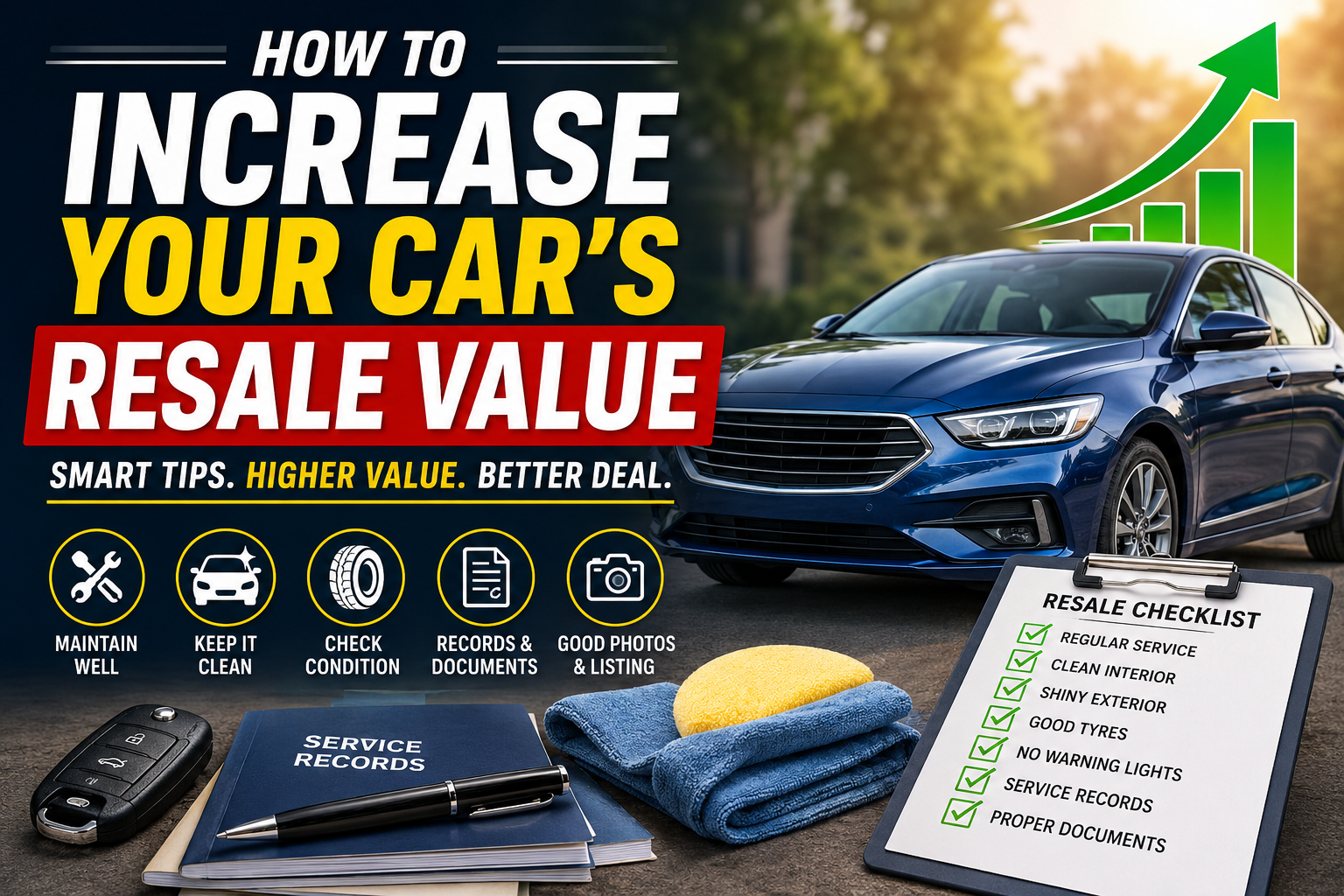
I remember seeing two almost identical cars listed for sale.
Same model.
Same year.
Same color.
Almost the same mileage.
But one car sold quickly for a better price.
The other stayed online for weeks.
At first, it did not make sense.
Then I looked closer.
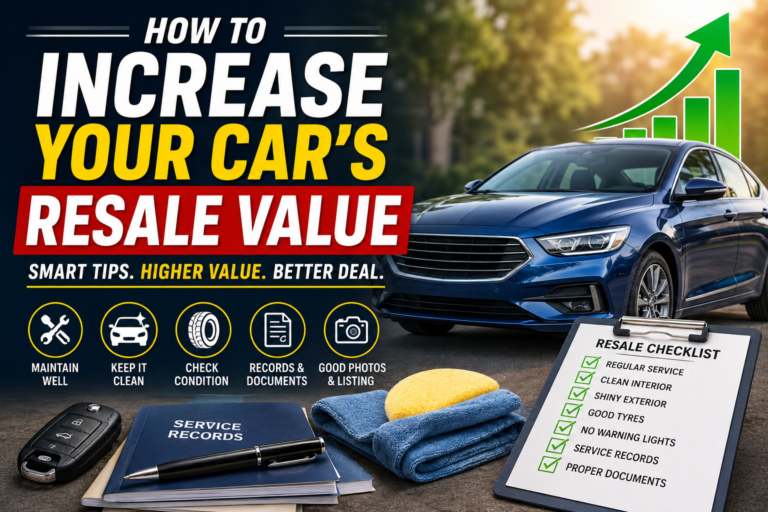
The first car had clean service records.
Fresh tires.
A clean interior.
Clear photos.
No warning lights.
No strange dents.
The seller had written a proper description and answered questions confidently.
The second car had dusty photos, missing records, worn tires, small scratches, and a description that only said, “Good condition, urgent sale.”
That was the difference.
Resale value is not only about the car’s age or brand.
It is also about how the car has been maintained, presented, documented, and sold.
A buyer is not just buying your car.
They are buying trust.
If your car looks cared for, drives well, has records, and feels low-risk, buyers are usually more willing to pay a better price.
This guide explains how to increase your car’s resale value in a simple, practical way before selling or trading it in.
Important: Resale value depends on your local market, vehicle condition, mileage, brand reputation, service history, demand, fuel prices, accident history, and buyer confidence. Always compare similar listings in your area before setting a price.
Table of Contents
- Quick Answer: How Can You Increase Your Car’s Resale Value?
- Key Facts About Car Resale Value
- Follow Regular Maintenance
- Keep Complete Service Records
- Fix Small Problems Before Selling
- Keep the Interior Clean and Fresh
- Protect the Exterior Paint
- Maintain Tires, Brakes, and Battery
- Avoid Cheap Modifications
- Repair Dents, Scratches, and Lights
- Keep Mileage Reasonable
- Check Warning Lights and Fluid Leaks
- Get a Vehicle History Report
- Take Better Photos and Write a Better Listing
- Choose the Right Time to Sell
- Know Your Car’s Real Market Value
- Be Honest With Buyers
- Common Mistakes That Lower Resale Value
- Pre-Sale Car Checklist
- Trade-In vs Private Sale
- FAQs About Car Resale Value
- Final Thoughts
- Sources and Further Reading
Quick Answer: How Can You Increase Your Car’s Resale Value?
You can increase your car’s resale value by keeping it clean, maintaining it properly, fixing small issues, saving service records, avoiding poor modifications, taking good photos, and selling it with honesty and confidence.
The most important resale-value steps are:
- Follow the maintenance schedule
- Keep service and repair records
- Fix warning lights before selling
- Repair small dents and scratches
- Clean the interior deeply
- Wash and polish the exterior
- Replace worn tires if needed
- Make sure brakes feel safe
- Check battery health
- Remove bad smells
- Avoid cheap aftermarket changes
- Get a vehicle history report
- Take clear photos
- Write a detailed listing
- Price the car realistically
Kelley Blue Book says trade-in value depends on factors such as mileage, vehicle condition, demand, and negotiation skills.
In simple words:
A clean, documented, well-maintained car looks safer to buy.
A safer-looking car is easier to sell.
And a car that is easier to sell can often bring a better price.
Key Facts About Car Resale Value
| Factor | Why It Matters | What You Can Do |
|---|---|---|
| Mileage | Lower mileage usually attracts more buyers | Avoid unnecessary driving before selling |
| Service history | Proves the car was maintained | Keep receipts and records |
| Exterior condition | First impression matters | Wash, polish, and repair visible damage |
| Interior condition | Buyers imagine daily use | Clean seats, carpets, dashboard, and trunk |
| Tires | Worn tires reduce buyer confidence | Replace or disclose condition |
| Brakes | Safety affects buyer trust | Inspect and repair if needed |
| Warning lights | Makes buyers suspicious | Diagnose and fix issues |
| Accident history | Can reduce value | Repair properly and be honest |
| Modifications | Bad mods can scare buyers | Keep the car close to stock |
| Photos/listing | Better presentation attracts better offers | Use daylight photos and detailed description |
Depreciation is usually one of the biggest ownership costs. Kelley Blue Book’s 2026 Best Resale Value announcement said an average 2026 model-year vehicle may retain only about 45% of its original value after five years.
You cannot stop depreciation completely.
But you can reduce avoidable value loss by taking better care of the car.
1. Follow Regular Maintenance
Maintenance is one of the biggest things buyers care about.
A car that looks clean but has poor maintenance can still be a risky purchase.
Regular maintenance helps protect the engine, transmission, brakes, tires, suspension, cooling system, and electrical system.
Important maintenance items
Follow the owner’s manual for:
- Engine oil changes
- Oil filter replacement
- Air filter replacement
- Cabin filter replacement
- Brake inspection
- Tire rotation
- Coolant service
- Transmission service
- Spark plug replacement
- Battery testing
- Belt and hose inspection
- Wheel alignment
- Fluid checks
Do not guess the maintenance schedule.
Use the owner’s manual because every vehicle has different requirements.
Why maintenance increases value
A buyer wants to know the car was not neglected.
If the car has been maintained on time, it gives the buyer more confidence.
That confidence can help your asking price.
A well-maintained car also performs better during test drives.
It starts smoothly.
It brakes properly.
It does not make strange noises.
It does not smell like burning oil.
It feels cared for.
That feeling matters.
2. Keep Complete Service Records
Service records are powerful.
They turn your claims into proof.
Anyone can say, “The car is maintained.”
But receipts, invoices, and records make that statement believable.
Consumer Reports advises used-car buyers to ask for copies of service records and compare them with the manufacturer’s maintenance schedule, because organized maintenance documents often indicate the car has been cared for.
What records should you keep?
Save records for:
- Oil changes
- Brake service
- Tire replacement
- Battery replacement
- Filter changes
- Transmission service
- Coolant service
- Suspension repairs
- Wheel alignment
- Major parts replacement
- Accident repairs
- Recall repairs
- Inspection reports
Keep paper receipts in a folder or take clear photos and save them digitally.
Why records matter
Records help answer buyer questions such as:
- When was the oil last changed?
- Are the tires new?
- Has the battery been replaced?
- Was the transmission serviced?
- Was the car repaired after an accident?
- Were parts replaced with quality parts?
A buyer may pay more for a car that feels lower risk.
Service records reduce uncertainty.
That is why they can support resale value.
3. Fix Small Problems Before Selling
Small problems can lower buyer confidence quickly.
A buyer may see one small issue and start wondering what else is wrong.
A broken light.
A weak battery.
A loose mirror.
A cracked wiper blade.
A missing trim piece.
A warning light.
A strange smell.
These things may not cost much to fix, but they can make the car feel neglected.
Small fixes worth considering
Before selling, check:
- Headlights
- Brake lights
- Turn signals
- Wiper blades
- Washer fluid
- Door handles
- Window switches
- Remote key battery
- Interior bulbs
- Loose trim
- Floor mats
- Minor rattles
- Tire pressure
- Small leaks
- Bad odors
Do not overspend
Not every repair is worth doing before selling.
For example, replacing an engine or transmission just to sell the car may not make financial sense unless the car’s value supports it.
But small, visible, affordable fixes can help the car feel better during inspection and test drive.
The goal is to remove easy objections.
When buyers have fewer objections, negotiation becomes easier.
4. Keep the Interior Clean and Fresh
The interior affects emotion.
A buyer may forgive a few miles.
They may not forgive a dirty seat, bad smell, sticky buttons, or old food under the seat.
The interior tells the buyer how the car was treated every day.
Clean these areas carefully
Before selling, clean:
- Seats
- Carpets
- Floor mats
- Dashboard
- Steering wheel
- Gear selector
- Door panels
- Cup holders
- Seat gaps
- Trunk
- Air vents
- Headliner
- Windows
- Touchscreen
- Seat belts
A clean interior makes the car feel newer.
Remove bad smells
Bad smells reduce value quickly.
Common causes include:
- Smoking
- Food spills
- Pets
- Moisture
- Mold
- Dirty cabin filter
- Old floor mats
- Leaks
- Air conditioning odor
Do not only spray perfume.
Strong fragrance can make buyers suspicious.
Instead:
- Vacuum deeply
- Clean fabric or leather properly
- Replace cabin air filter if needed
- Dry wet carpets
- Remove trash
- Clean vents
- Use odor remover carefully
A fresh-smelling car feels better during the test drive.
5. Protect the Exterior Paint
The exterior creates the first impression.
Before the buyer hears the engine, checks the mileage, or asks about service history, they see the car.
Paint condition matters.
A car with clean, shiny paint usually looks more valuable than a dull, dirty car.
Exterior care steps
To improve presentation:
- Wash the car properly
- Remove tar spots if safe
- Clean wheels
- Polish dull paint if needed
- Wax or seal the paint
- Clean windows
- Restore faded plastic trim carefully
- Remove sticker residue
- Clean headlights
- Clean door edges
- Clean fuel cap area
Be careful with polishing
Do not aggressively polish paint if you do not know what you are doing.
Thin or damaged paint can be made worse.
For better results, use a professional detailer if the car’s value justifies it.
Why paint condition matters
Paint condition can suggest how the car was stored and cared for.
A car with faded paint, scratches, bird-dropping marks, and dirty wheels may feel neglected.
A clean exterior makes buyers more interested before the conversation even starts.
6. Maintain Tires, Brakes, and Battery
Tires, brakes, and battery are practical buyer concerns.
They are also easy for buyers to notice.
A buyer may use worn tires, weak brakes, or a weak battery to negotiate a lower price.
Tires
Check:
- Tread depth
- Sidewall cracks
- Bulges
- Uneven wear
- Tire age
- Tire pressure
- Matching brands and sizes
A car with four good tires feels better than a car that needs immediate tire replacement.
Uneven wear may also suggest alignment or suspension problems.
Brakes
Check for:
- Squeaking
- Grinding
- Vibration
- Soft pedal
- Pulling while braking
- Brake warning light
- Worn pads
- Worn rotors
Brakes are a safety item.
If they feel weak during a test drive, the buyer may walk away.
Battery
A weak battery creates a bad first impression.
If the car struggles to start during a showing, the buyer may assume bigger problems.
Before selling, check:
- Battery age
- Terminal corrosion
- Starting strength
- Charging system
- Warning lights
A fresh or tested battery can make the car feel more reliable.
7. Avoid Cheap Modifications
Many owners think modifications increase value.
Sometimes they do.
Usually, they do not.
A modification that you like may not be liked by the next buyer.
In many cases, modifications reduce the buyer pool.
Mods that may lower resale value
Be careful with:
- Loud exhausts
- Cheap body kits
- Poor window tint
- Oversized wheels
- Lowered suspension
- Fake carbon trim
- Aftermarket wiring
- Poor audio installation
- Engine tuning
- Non-original lights
- Steering-wheel covers that look worn
- Interior LED strips
- Stickers and decals
Buyers often prefer cars that look original, clean, and well-maintained.
Why stock cars often sell better
A stock car feels safer.
It suggests the car may not have been abused.
It is also easier to insure, inspect, repair, and resell.
If you added modifications, keep original parts if possible.
Before selling, consider returning the car closer to factory condition.
8. Repair Dents, Scratches, and Lights
Small cosmetic issues can make the car look cheaper than it really is.
Not every scratch needs full repainting.
But visible dents, broken lights, cracked mirrors, and damaged bumpers can reduce buyer interest.
Cosmetic repairs worth considering
Depending on cost, consider fixing:
- Small dents
- Scratches
- Cracked lights
- Broken mirrors
- Missing badges
- Damaged wheel covers
- Loose bumper clips
- Faded headlights
- Broken grille pieces
- Door dings
Be realistic
Do not spend more than the repair will return in value.
For a low-value older car, expensive paint work may not make sense.
For a newer car, professional dent removal or bumper repair may help.
Accident damage warning
Accident history affects value even after repair.
Kelley Blue Book explains that every reported accident can reduce a car’s market value, even if repairs return it to its pre-accident condition.
If the car was in an accident, repair it properly and disclose it honestly.
Trying to hide damage can destroy trust.
9. Keep Mileage Reasonable
Mileage is one of the first things buyers check.
You cannot reverse mileage.
But you can avoid adding unnecessary miles before selling.
Why mileage matters
Mileage suggests how much the car has been used.
Higher mileage can mean more wear on:
- Engine
- Transmission
- Suspension
- Seats
- Steering components
- Brakes
- Tires
- Interior parts
Kelley Blue Book says used-car pricing accounts for mileage and adjusts value up or down when mileage is higher or lower than typical.
What you can do
Before selling:
- Avoid unnecessary long trips
- Do not delay selling for months if you are ready
- Keep maintenance current
- Show service records to support high mileage
- Mention highway miles if true
- Keep the car clean despite mileage
High mileage does not automatically make a car bad.
A well-maintained high-mileage car can still be attractive.
But you need records and condition to support the price.
10. Check Warning Lights and Fluid Leaks
Dashboard warning lights can destroy a sale quickly.
Even if the issue is minor, buyers may assume the worst.
Warning lights to check
Before selling, check:
- Check engine light
- Oil pressure light
- Battery light
- Brake warning light
- ABS light
- Airbag light
- Tire-pressure warning
- Coolant temperature warning
- Transmission warning
- Traction control warning
Do not simply clear warning codes without fixing the issue.
A buyer may scan the car and discover pending codes.
That looks dishonest.
Check for leaks
Look under the car for:
- Engine oil leaks
- Coolant leaks
- Brake fluid leaks
- Transmission fluid leaks
- Power steering fluid leaks
- Fuel leaks
Small leaks can become negotiation points.
Major leaks can make buyers walk away.
Fix what is reasonable and disclose what remains.
11. Get a Vehicle History Report
A vehicle history report can help serious buyers trust your car.
It may show title information, accident history, mileage records, ownership history, and service history.
Kelley Blue Book explains that vehicle history reports can reveal information such as maintenance, accidents, mileage accuracy, title status, and more, but they do not replace a full pre-purchase inspection by a mechanic.
Why sellers should provide it
Many buyers will ask for a history report.
Providing one upfront can make your listing stronger.
It shows transparency.
It also saves time with serious buyers.
What buyers may look for
A buyer may check:
- Accident records
- Flood damage
- Salvage title
- Odometer issues
- Number of owners
- Service records
- Registration history
- Recall information
The Federal Trade Commission also advises used-car buyers to obtain a vehicle history report and check for open safety recalls.
Important note
A clean history report does not guarantee the car is perfect.
Some accidents or repairs may not appear.
That is why condition, inspection, and honesty still matter.
12. Take Better Photos and Write a Better Listing
Presentation matters.
A good listing can attract more buyers.
More buyers can mean better offers.
A bad listing can make a good car look average.
Photo tips
Take photos in daylight.
Clean the car first.
Choose a simple background.
Take photos of:
- Front view
- Rear view
- Both sides
- Interior front seats
- Rear seats
- Dashboard
- Odometer
- Engine bay
- Trunk
- Tires
- Wheels
- Service records
- Keys
- Any damage
Do not use dark, blurry, or confusing photos.
Do not hide damage.
Good buyers appreciate honesty.
Listing description tips
Include:
- Year
- Make
- Model
- Trim
- Mileage
- Engine type
- Transmission
- Fuel type
- Ownership history
- Service history
- Tire condition
- Battery condition
- Accident history
- Reason for selling
- Known issues
- Asking price
- Contact method
Better listing example
Instead of writing:
“Good car. Urgent sale.”
Write:
“Well-maintained 2019 Toyota Corolla, 68,000 miles, automatic, clean interior, regular oil changes, recent tires, battery replaced last year, no warning lights, service records available. Minor scratch on rear bumper shown in photos. Selling because I upgraded.”
This feels more trustworthy.
Trust helps value.
13. Choose the Right Time to Sell
Timing can affect resale value.
Demand changes by season, fuel prices, economy, and vehicle type.
Examples
Small fuel-efficient cars may attract more attention when fuel prices are high.
SUVs may be more popular in family-shopping seasons.
Convertibles may sell better before warm weather.
Four-wheel-drive vehicles may sell better before winter in colder markets.
Local demand matters more than general advice.
Do not wait too long
Waiting can also cost money.
The car keeps aging.
Mileage increases.
Insurance continues.
Maintenance continues.
New model years arrive.
If you are ready to sell, delaying for too long may reduce value.
Simple rule
Sell when the car is clean, maintained, documented, and market demand is reasonable.
A well-prepared car listed today may do better than a neglected car listed later.
14. Know Your Car’s Real Market Value
Many sellers overprice their car because they are emotionally attached to it.
Buyers do not pay for your memories.
They pay for condition, mileage, market demand, and comparable listings.
How to estimate value
Compare:
- Similar year
- Same model
- Same trim
- Similar mileage
- Similar condition
- Same transmission
- Similar accident history
- Same local market
- Private sale vs dealer price
Kelley Blue Book says its car values consider a vehicle’s ZIP code, age, mileage, equipment, and condition.
Use more than one source
Check:
- Online valuation tools
- Local marketplace listings
- Dealer listings
- Trade-in offers
- Private-sale prices
- Similar sold listings if available
Remember:
Asking price is not always selling price.
Some sellers list too high and negotiate later.
Look at realistic market behavior.
Price strategy
If your car is clean, documented, and well-maintained, you can price it confidently.
But leave some room for negotiation.
Buyers expect negotiation in many markets.
15. Be Honest With Buyers
Honesty protects the sale.
Trying to hide issues may create problems later.
A serious buyer may bring a mechanic, scan codes, check paint thickness, inspect records, or run a history report.
If they discover something you hid, trust is gone.
Be clear about:
- Accidents
- Repainted panels
- Mechanical issues
- Warning lights
- Leaks
- Mileage concerns
- Missing documents
- Previous repairs
- Modifications
- Remaining loan or lien
- Title issues
Honesty does not mean you must undersell the car.
It means you present the car clearly and fairly.
A buyer may still accept small issues if the price is fair.
But they do not like surprises.
Common Mistakes That Lower Resale Value
Mistake 1: Skipping maintenance
Neglected maintenance reduces confidence and may create expensive problems.
Mistake 2: Losing service records
Without records, buyers may not believe the car was maintained properly.
Mistake 3: Ignoring warning lights
A dashboard warning light can immediately lower buyer trust.
Mistake 4: Selling a dirty car
A dirty car looks neglected even if it runs well.
Mistake 5: Using poor photos
Bad photos reduce interest and can make buyers skip your listing.
Mistake 6: Hiding damage
Hidden damage usually gets discovered during inspection.
Mistake 7: Overpricing emotionally
Your asking price should match the market, not personal attachment.
Mistake 8: Making cheap modifications
Poor modifications can reduce the buyer pool.
Mistake 9: Not fixing small issues
Small problems can become negotiation weapons.
Mistake 10: Being vague with buyers
A vague description makes buyers suspicious.
Detailed, honest listings perform better.
Pre-Sale Car Checklist
Before listing your car, check:
- Engine oil level
- Coolant level
- Brake fluid level
- Washer fluid
- Tire pressure
- Tire tread
- Brake noise
- Battery strength
- Headlights
- Brake lights
- Turn signals
- Wipers
- Air conditioning
- Windows
- Door locks
- Remote key
- Warning lights
- Fluid leaks
- Interior cleanliness
- Exterior cleanliness
- Service records
- Ownership documents
- Vehicle history report
- Spare key
- Owner’s manual
Also prepare:
- Clear photos
- Honest description
- Fair market price
- Answers to buyer questions
- Safe meeting location
- Test-drive plan
- Payment method
- Transfer documents
Trade-In vs Private Sale
You can usually sell your car in two main ways:
Trade it in to a dealer.
Or sell it privately.
Trade-in
Trade-in is usually easier.
You take the car to a dealer and use its value toward another car.
Benefits:
- Faster process
- Less effort
- No need to meet many buyers
- Easier paperwork
- Possible tax benefit in some places
Drawback:
- Usually lower value than private sale
Kelley Blue Book explains that trading in can reduce the purchase price of a new vehicle and may lower monthly payments, while trade-in value depends on mileage, condition, demand, and negotiation.
Private sale
Private sale usually takes more effort but may bring more money.
Benefits:
- Higher possible selling price
- Direct negotiation
- More control over listing
- Better chance to explain service history
Drawbacks:
- More time
- More messages
- Test drives
- Safety concerns
- Paperwork responsibility
- Payment risk
Which is better?
Choose trade-in if you want convenience.
Choose private sale if you want the best possible price and are willing to do the work.
FAQs About Car Resale Value
What increases a car’s resale value the most?
The biggest factors are good condition, reasonable mileage, complete service records, clean history, strong demand, and proper presentation.
Does regular maintenance improve resale value?
Yes. Regular maintenance helps the car run better and gives buyers confidence. Service records are especially helpful.
Should I repair my car before selling it?
Fix small and affordable problems that buyers will notice. But avoid spending more on major repairs than you can recover in the sale price.
Does cleaning a car help resale value?
Yes. A clean car makes a stronger first impression and suggests the vehicle was cared for.
Do scratches reduce car value?
Visible scratches can reduce buyer interest and give buyers a reason to negotiate. Small scratches may be worth fixing before selling.
Do dents reduce resale value?
Yes, especially if they are visible. Paintless dent repair may be useful for small dents if the cost is reasonable.
Does accident history lower resale value?
Yes. Reported accidents can reduce market value even if the car was repaired properly.
Should I keep service receipts?
Yes. Service receipts are proof that the car was maintained. They can increase buyer trust.
Does mileage affect resale value?
Yes. Mileage is one of the most important value factors. Lower mileage usually helps, but maintenance and condition also matter.
Are modifications good for resale value?
Usually not. Most buyers prefer clean, original cars. Poor modifications can lower value.
Should I replace tires before selling?
If tires are badly worn, replacing them may help. If they are still usable, you can disclose their condition and price the car fairly.
Should I get the car detailed before selling?
A good detail can help, especially if the car is newer or valuable. Clean cars usually photograph better and attract more buyers.
Is private sale better than trade-in?
Private sale may bring more money, but trade-in is easier and faster. The better option depends on your time and comfort level.
How do I price my car correctly?
Compare similar cars in your area, check valuation tools, consider condition and mileage, and leave reasonable room for negotiation.
Should I mention problems in the listing?
Yes. Being honest builds trust and avoids wasting time with buyers who will discover the issue later.
Final Thoughts
Increasing your car’s resale value is not about one magic trick.
It is about many small decisions.
Changing oil on time.
Keeping records.
Cleaning the interior.
Protecting the paint.
Fixing lights.
Maintaining tires.
Avoiding cheap modifications.
Taking good photos.
Writing a clear listing.
Being honest.
A buyer wants confidence.
They want to feel that the car was loved, not neglected.
They want proof that maintenance was done.
They want the test drive to feel smooth.
They want the photos to match the real car.
They want no surprises.
You cannot control everything.
You cannot stop age.
You cannot erase mileage.
You cannot fully avoid depreciation.
But you can control condition, records, presentation, and honesty.
That is where resale value improves.
A well-maintained car does not only sell for more.
It sells faster.
With fewer arguments.
And with more trust.
The best time to protect resale value is not the day you sell.
It starts the day you own the car.
Sources and Further Reading
- Kelley Blue Book — 2026 Best Resale Value Awards and depreciation insights.
- Kelley Blue Book — Trade-in value tips and factors affecting value.
- Kelley Blue Book — Vehicle history report guidance.
- Kelley Blue Book — Diminished value after an accident.
- Kelley Blue Book — Used car value factors including mileage, age, equipment, condition, and location.
- Consumer Reports — Used car inspection and service-record guidance.
- Federal Trade Commission — Used car Buyers Guide, vehicle history report, and recall advice.
- Your vehicle manufacturer’s owner’s manual
- Local used-car listings, inspection reports, and trusted mechanic advice
About the Author